| | by admin | | posted on 23rd February 2026 in Quakers Through the Ages | | views 59 | |
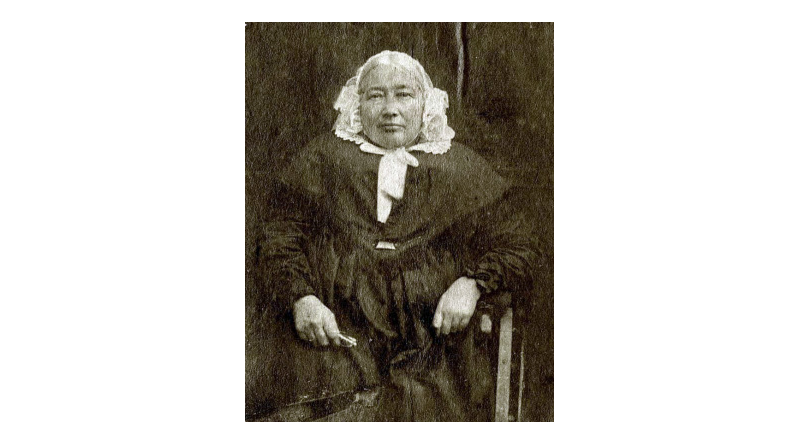
Anna Gurney (1795–1857) was a Quaker scholar and reformer whose lifelong partnership with Sarah-Maria Buxton can be traced through domestic life, public witness, and a shared tombstone inscription.
Anna Gurney was born into privilege, intellect and faith — and into limitation. Born in 1795 at Keswick Hall near Norwich, the youngest child of a prominent Quaker family, she contracted polio as an infant and lost the use of her legs. For the rest of her life she would move through the world in a wheelchair.
Yet physical constraint did not narrow her world. If anything, it intensified it.
“I have been taught by long suffering that the mind may travel where the body cannot.”
Raised within the disciplined evangelical Quakerism of the early 19th century, Gurney absorbed the movement’s emphasis on literacy, inward reflection and moral seriousness. Quakers affirmed the spiritual authority of women. That conviction did not erase social barriers, but it created space. Within that space, Anna Gurney flourished.
By her twenties she had mastered Latin, Greek, Hebrew and Anglo-Saxon. In 1819 she privately printed a translation of the Anglo-Saxon Chronicle — an extraordinary intellectual achievement for a woman in Regency England. She went on to study Scandinavian languages and developed expertise in northern European literature and antiquities.
She never held a university post. Women could not. But she corresponded with scholars, built a serious library and quietly earned respect in academic circles. In 1845 she became the first woman member of the British Archaeological Association.
Her faith and her intellect were not separate compartments. Quaker culture valued seriousness and enquiry. In that environment, learning was not unfeminine; it was disciplined. Gurney’s intellectual independence was not rebellion. It was vocation.
“We are stewards of what we possess, and must use it for the good of others.—
In 1825, after her mother’s death, Gurney moved to Northrepps Cottage near Cromer. There she established the household that would define her emotional life.
She shared the cottage with Sarah-Maria Buxton, an abolitionist writer and member of another prominent Norfolk Quaker family. The two women became known locally as the “cottage ladies.” They lived together for over a decade.
They worked together in anti-slavery campaigning. They supported education initiatives. They hosted visitors. They shared daily life. Surviving letters refer to them as “faithful and beloved partners.” The language is affectionate, devoted and enduring.
In the 19th century, such relationships were often described as romantic friendships. The vocabulary of lesbian identity as we know it did not yet exist. Female partnerships could be intense, lifelong and emotionally central without being publicly defined as sexual. But we must look at the whole picture. They shared a home. They shared reform work. They shared reputation. And they chose to be buried together. Whatever terminology we apply, theirs was a committed life partnership.
When Sarah-Maria Buxton died in 1839, Gurney ensured they would share a grave at St Martin’s Church in Overstrand. Burial in Victorian England was not accidental; it reflected belonging and intention.
Gurney chose the wording for their shared tombstone which at the end reads, ‘They were partners and chosen Sisters knit together in the Love of God, and heirs together of Eternal Life,’
The phrasing is theological, not romantic in modern terms. Yet it is unmistakably relational. The word partners appears first. “Chosen Sisters” signals voluntary covenant rather than blood kinship. “Knit together” evokes binding and unity. In Quaker language, love of God was not abstract — it was lived out in conduct and commitment. To select such language was to speak clearly within the vocabulary available.
There was no public scandal. Their life together had been visible and, within the conventions of Quaker society, accepted. Early nineteenth-century Quakerism did not articulate a theology of same-sex relationships as modern Friends do. But it did create social space where spiritually serious women could form enduring households together. Gurney and Buxton inhabited that space fully.
After Buxton’s death, Anna Gurney remained at Northrepps Cottage. Her public life continued to expand.
She became deeply involved in the study of the Cromer Forest Bed on the Norfolk coast, assembling fossil collections that included mammoth remains. Her work contributed to early geological understanding of prehistoric Britain. Specimens she gathered now reside in museum collections.
She also engaged in practical philanthropy. Concerned about shipwrecks along the dangerous Norfolk coast, she purchased a Manby mortar — a life-saving device used to fire lines to stranded ships. From her wheelchair, she directed rescue efforts on the beach.
She funded a local school that emphasised encouragement over punishment. She moved easily between scholarship, reform and civic action. Here was a disabled woman, unmarried, publicly authoritative, intellectually respected and economically independent. She did not fit the domestic ideal of Victorian womanhood. Yet she was not marginalised. Her competence made her formidable.
Even in her private notes, you can feel the steady, observant mind at work — precise, unsentimental, curious about the living world around her.
After her death in 1857, Anna Gurney’s scholarly achievements were remembered. Her geological work was catalogued. Her philanthropy was noted. Her partnership was softened.
Like many 19th century same-sex relationships, it was folded into the safer language of devoted friendship. For decades, histories focused on her intellect and family connections. The emotional architecture of her life remained in the background.
Only in recent decades have historians and local heritage institutions begun to revisit that story with clearer eyes. As LGBTQ+ history has emerged as a recognised field, figures like Anna Gurney have been reconsidered — not to impose modern labels carelessly, but to acknowledge patterns long obscured.
The evidence does not allow absolute certainty about the private dimensions of her relationship with Buxton. But it does show a shared life named, in stone, as partnership. And that matters.
Today, Quakers in Britain formally celebrate same-sex marriages and affirm LGBTQ+ relationships. That development rests on the historic Quaker conviction that there is “that of God” in every person.
Anna Gurney lived long before such declarations were possible. She had no public language for lesbian identity. She did not campaign for sexual liberation. But she lived truthfully within the structures available to her.
She built a household with the woman she loved. She pursued scholarship without apology. She exercised authority despite disability. She chose words for a tombstone that spoke of partnership.
In the long Quaker timeline, Anna Gurney stands between silence and articulation, between respectability and quiet defiance. She did not shout. She did not declare an identity. She simply lived — and named her love in the language of her faith. Sometimes, in its own century, that is radical enough.
Rooted in Quaker radical faith & activism, YQN empowers young adults to explore Quakerism, challenge injustice, and build a more peaceful future through friendship.