| | by admin | | posted on 17th February 2026 in no cat and Articles | | views 83 | |
After the school strikes faded from the headlines, youth climate resistance didn't end — it diversified, hardened, and learned how power really works.
The youth climate movement was never only about a Friday photo. It was a generation forcing a moral emergency into public view, then discovering what happens when politics absorbs outrage but refuses change.
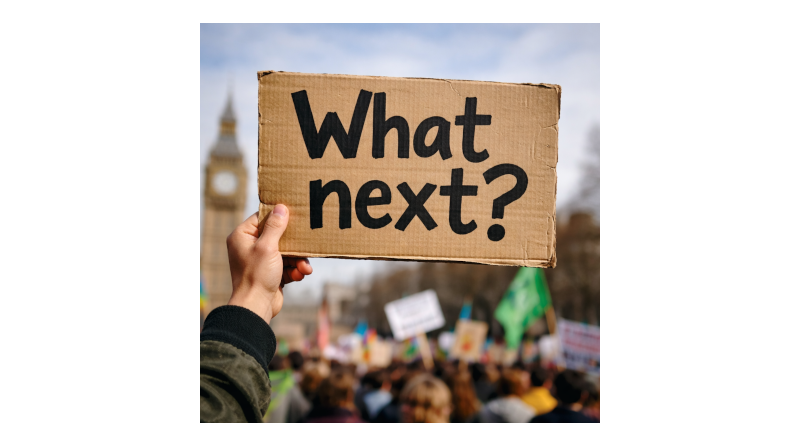
What comes after the placards is the real test: organising without novelty, sustaining pressure without a news cycle, and moving from symbolic protest to disruption that governments and corporations cannot ignore.
This is where climate justice sharpens. Not 'save the planet' as a slogan, but a demand for fairness: who caused the crisis, who profits, and who pays first when heat, flood, and hunger hit.
2018 - 2019 - School strikes go global
Students walk out, build momentum fast, and force climate breakdown into everyday conversation.
2020 - 2021 - A movement under pressure
Lockdowns disrupt street mobilisation, and many groups shift to local mutual aid, online organising, and longer-term campaigning.
2022 - Direct action escalates
New waves of civil resistance focus on disruption, fossil fuel expansion, and the systems that keep emissions locked in.
2023 - 2024 - Protest law tightens
As tactics sharpen, so does state response. New offences and heavier policing increase risk, especially for younger activists.
2025 - 2026 - The post-spotlight era
The question shifts from visibility to endurance: can youth-led resistance keep moving when the cameras move on?
The school strikes proved something vital: young people can move the baseline of public debate. But they also exposed the limits of polite urgency. When leaders praise 'passion' while approving new extraction, moral theatre becomes a trap.
That is why parts of the movement turned toward systemic disruption. Groups such as Just Stop Oil made a simple, high-conflict demand that forces a political choice.
“Our supporters will be returning … every day until our demand is met: no new oil and gas in the UK.”
This shift isn't about spectacle for its own sake. It's a strategic argument: if climate collapse is the backdrop, then 'normal' politics is already a form of violence — slow, distributed, and denied.
There is a cost to living inside emergency language. Many young activists carry a double burden: fear for the future, and the pressure to fix it. Burnout, grief, and exhaustion are not personal failures. They are predictable outcomes of asking teenagers and students to hold a crisis that governments refuse to confront.
Intergenerational tension sits underneath this. Older institutions often want youth energy without youth power. They offer advisory panels, youth 'voices', and carefully managed consultation. Young organisers respond by building parallel power: campus occupations, community alliances, worker solidarity, and direct action aimed at the economic engines of fossil expansion.
The movement is also learning to protect itself: rotating roles, mutual care, legal support, small local groups that outlast national hype, and a harder realism about repression. Endurance is becoming a tactic.
Faith communities can sound quiet in public debates, but they hold something the climate movement needs: moral continuity. They can carry campaigns across decades, not just seasons. They can also name the crisis without pretending it is merely technical.
“The climate crisis is a crisis of justice and inequality.”
This is where climate justice becomes more than carbon maths. It becomes a question of repair — whose lives are treated as disposable, whose communities are sacrificed, and whose suffering is written off as 'collateral'.
And the science is not neutral comfort. It is a warning with a deadline.
“The window of opportunity to secure a liveable and sustainable future for all is rapidly closing.”
The next phase is less photogenic, but more decisive. Youth climate resistance will keep splitting into multiple lanes: electoral pressure, workplace organising, community resilience, and disruption of fossil infrastructure. The movement will not be one thing. That is a strength, not a weakness.
The sharper question is this: will institutions treat youth resistance as a branding opportunity, or as a mandate to change course? If governments keep approving new extraction while criminalising disruption, they are making the argument for escalation themselves.
Beyond the placards, the movement becomes a choice: accept managed decline, or build the power to force a different future. The spotlight may move on. The heat won't.
Rooted in Quaker radical faith & activism, YQN empowers young adults to explore Quakerism, challenge injustice, and build a more peaceful future through friendship.