| | by admin | | posted on 5th March 2026 in Quakers Through the Ages | | views 23 | |
Hoziers Take Me to Church uses religious language to challenge religious power, echoing Quaker ideas of the Inner Light, and became a defining LGBTQ+ protest anthem.
When the Irish musician Hozier released the song Take Me to Church in 2013, it quickly became clear that this was not just another chart success. Beneath its blues-gospel sound lay something far more provocative: a song that used religious language to challenge religious power.
Recorded in a small attic studio in County Wicklow, the track travelled rapidly across the world. Listeners were drawn not only to its haunting melody but to its moral force. The song spoke about love, judgement and dignity in a way that resonated far beyond the boundaries of popular music.
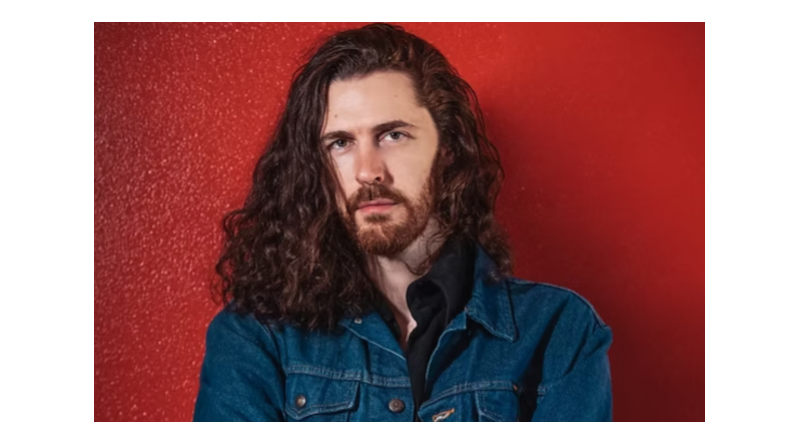
Hozier, born Andrew Hozier-Byrne in Ireland in 1990, grew up in a household shaped by the Quaker tradition. Although he later described himself as agnostic, the ethical instincts associated with Quaker culture remain visible in his work. His songwriting repeatedly returns to themes of conscience, justice and the misuse of institutional authority.
At the centre of his breakthrough song lies a challenge that would have sounded familiar to the radical voices who launched the Quaker movement in the 17th century: the belief that human dignity cannot be defined or diminished by religious institutions.
At first glance Take Me to Church appears saturated with religious imagery. The lyrics speak of worship, confession, sin and ritual. Yet the song is not a celebration of organised religion. Instead it uses the language of faith to question the authority of institutions that claim the right to judge human love.
“Take me to church
I’ll worship like a dog at the shrine of your lies.”
The lyric is deliberately provocative. The singer adopts the posture of worship while exposing what he sees as the hypocrisy of religious condemnation. Love becomes the sacred experience, while the institution claiming moral authority is portrayed as deeply flawed.
“We were born sick, you heard them say it.”
Here Hozier confronts a theological idea that has shaped centuries of religious teaching — the belief that human beings are inherently sinful and morally broken. In the song this doctrine becomes a tool used to condemn love and identity.
Rather than rejecting spirituality altogether, the song questions whether institutions that claim to defend morality have always lived up to the compassion and dignity that faith is meant to protect.
Although Hozier rarely frames his work in explicitly Quaker terms, several themes in Take Me to Church echo ideas that shaped early Quaker theology.
A founder of the Quaker movement, George Fox, challenged the religious authorities of his time by insisting that divine truth could be encountered directly within the human soul.
“There is that of God in everyone.”
This belief later became known as the Inner Light, the idea that every person carries a spark of the divine and therefore possesses inherent spiritual dignity.
Seen through that lens, the lyric “We were born sick” becomes more than a criticism of religious language. It challenges the assumption that human beings must first be declared morally broken in order to be saved.
“The only heaven I’ll be sent to
Is when I’m alone with you.”
Here the sacred is not located in a building, a hierarchy or a ritual. Instead it appears within human relationship. The idea that holiness can be found in everyday life would have resonated strongly with early Quaker writers such as Isaac Penington.
“The Light shines in the heart and makes love the law of life.”
Early Quakers rejected elaborate ceremonies and priestly authority because they believed spiritual truth could be encountered inwardly through conscience. Worship was not confined to churches but could emerge wherever people listened to the quiet voice of the Inner Light.
In that sense, Hozier’s lyrics echo a much older spiritual instinct — one that places love, dignity and conscience above institutional power.
While the song’s spiritual themes drew critical attention, its cultural influence was shaped most powerfully by its connection to LGBTQ+ equality.
The music video for Take Me to Church depicts a violent attack on a gay couple. The stark black-and-white imagery confronts viewers with the reality of homophobic persecution and links that violence to religious condemnation of same-sex relationships.
The video spread rapidly across the internet and helped transform the song into a global protest anthem.
For many listeners, the song expressed something they had long felt but rarely heard voiced so clearly — that love should never be treated as a moral failing.
At pride events, equality campaigns and protest gatherings, the song became a powerful declaration of solidarity. Its message resonated particularly strongly in Ireland, where debates about sexuality and religious influence had shaped public life for generations.
Two years after the song’s release, Ireland voted overwhelmingly in favour of marriage equality through the 2015 Irish Marriage Equality Referendum. Although Take Me to Church was not written specifically for that campaign, it captured the cultural shift taking place across the country.
The song did something rare in popular music: it transformed a deeply personal experience of love and rejection into a wider moral argument about dignity and justice.
Hozier does not claim the role of preacher or theologian. Yet in Take Me to Church he performs a task that prophets, reformers and dissenters have often taken upon themselves: using the language of faith to challenge the misuse of power.
The song refuses to accept a world in which love can be declared sinful or human dignity defined by institutions. Instead it insists that conscience, compassion and relationship carry their own sacred authority.
Three centuries earlier, the first Quakers stood in marketplaces and meeting houses making a similar claim that divine truth was not controlled by churches or hierarchies but lived quietly within every human heart.
In turning a song about love into a defence of dignity, Hozier gave contemporary culture something rare, a piece of music that sounds less like entertainment and more like a moral witness.
Rooted in Quaker radical faith & activism, YQN empowers young adults to explore Quakerism, challenge injustice, and build a more peaceful future through friendship.