
| | by admin | | posted on 10th January 2023 in Quakers Through the Ages | | views 3407 | |
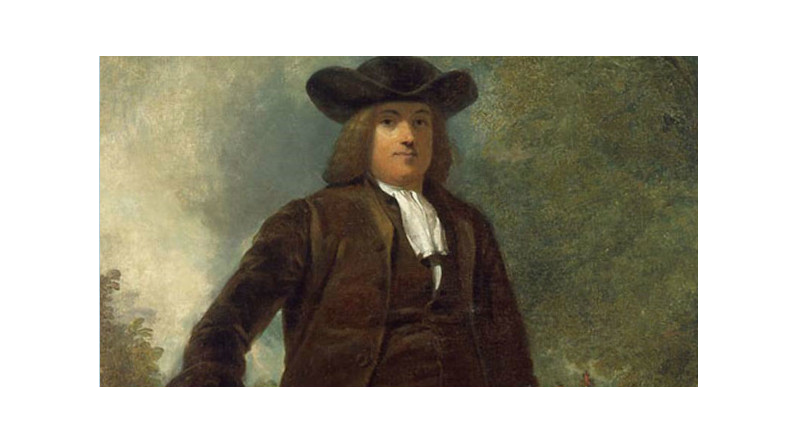
William Penn (1644 – 1718) is a British Quaker best known for founding Pennsylvania and its city, Philadelphia.
Penn was born on 14 October, 1644 in London, England. His father was an admiral in the English navy and a wealthy landowner. While Penn was growing up, England went through some very turbulent times. King Charles I was executed in 1649 and parliament took control of the country. In 1660, the monarchy was restored when Charles II was crowned king.
As part of a wealthy family, William received an excellent education. He first attended the Chigwell School and later had private tutors. At the age of 16, in 1660, William attended Oxford University where he came across Quakerism.
Penn became a Quaker when he was twenty-two and developed a close friendship with its main founder George Fox. It was not easy for him. He was arrested for attending Quaker meetings, but was released because of his famous father. However, his father was not happy with him and forced him out of the house. He became homeless and lived with other Quaker families for a while.
Penn also became well-known for his religious writings in support of the emerging Quaker faith. He was once again put into prison at the Tower of London. There he continued to write. Around this time, Penn’s father became ill. His father had grown to respect his son’s beliefs and courage. He left Penn a large fortune when he died.
With the conditions for Quakers getting worse in England, Penn came up with a plan. He went to the king and proposed that the Quakers should leave England and have their own colony in the Americas. The king liked the idea and gave Penn a charter for a large tract of land in North America. At first the land was called Sylvania, which means “woods”, but it was later named Pennsylvania in honor of William Penn’s father.
In 1682, William Penn and around one hundred Quaker settlers arrived in Pennsylvania. They established the city of Philadelphia. Penn had designed the city which had streets laid out in a grid. The city and the colony was a success. Led by Penn, the new constitution protected the rights of the citizens and maintained peace with the local Native Americans. By 1684, there were around 4,000 people living in the colony.
Penn envisioned Pennsylvania to not only be a Quaker land, but also a free land. He wanted freedom for all religions and a safe place for persecuted minorities to live – which became known as the Holy Experiment. He also wanted peace with the Native Americans and hoped they could live together as “neighbors and friends.”
Pennsylvania adopted a constitution called the Frame of Government. The government had a parliament that consisted of two houses of leaders. These houses were to impose fair taxes and to protect the rights of private property. The constitution guaranteed the freedom of worship. Penn’s constitution was considered a historical step towards democracy in America. It was also during this period that Penn pioneered the idea of a European Parliament.
Penn was only in Pennsylvania for two years before he traveled back to England in 1684 to resolve a border dispute with Lord Baltimore between Maryland and Pennsylvania. While back in England, Penn ran into financial issues. At one point he lost the charter to Pennsylvania and was thrown into debtor’s prison.
In 1699, fifteen years later, Penn returned to Pennsylvania. He found a thriving colony where people were free to worship their own religion. It wasn’t long, however, before Penn once again had to return to England where he wrote More Fruits of Solitude in 1703. Unfortunately, he was plagued with business issues for the rest of his life.
Penn died poor on July 30, 1718, in Berkshire, England, from the complications of a stroke. Although he died poor, the colony he founded went on to be one of the most successful of the American colonies. The ideas he had for religious freedom, education, civil rights, and government would pave the wave for the democracy and constitution of the United States – with Philadelphia City Hall both being the place where the Declaration of Independence was signed and home to the Liberty Bell.